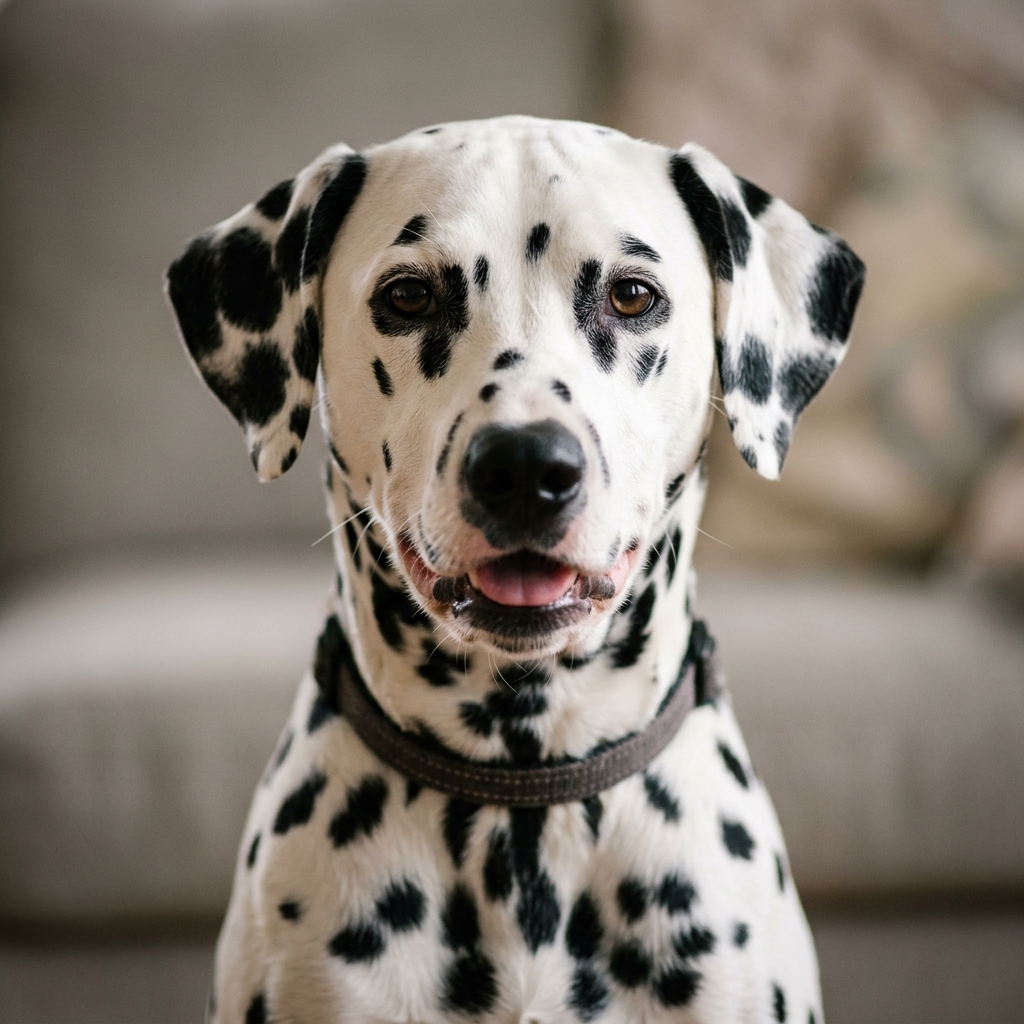
Dalmatian
- Group
- Non-Sporting
- Size
- 45–70 lb · 19–24 inches at shoulder
- Temperament
- Energetic, dignified, outgoing, loyal, intelligent
- Life expectancy
- 11–13 years
- Coat
- Short, dense; sheds heavily and constantly
- Colors
- White with black or liver spots (born pure white)
- AKC recognized
- Yes
- Health note
- Congenital deafness affects a notable share of the breed
Is a Dalmatian right for you?
A brilliant dog for the right owner, and one of the most commonly regretted impulse buys for the wrong one — usually someone who fell for the film. Know what you are taking on.
Energy, energy, energy. This is the headline. Dalmatians were built to run all day beside a carriage, and that engine is still inside the modern dog. They need serious daily exercise — running, not just strolling. An under-exercised Dalmatian becomes destructive and frustrated, and a great many end up in rescue for exactly this reason. Match the energy or choose another breed.
Deafness. Congenital hearing loss affects a meaningful share of the breed — some dogs are deaf in one ear, some in both. Responsible breeders BAER-test their puppies and will tell you each one's status. A deaf Dalmatian can live a full, happy life with hand-signal training, but it changes the household, and you should know before you commit.
Urinary health. Dalmatians have a unique quirk of metabolism that predisposes them to urinary stones. It is managed with the right diet and constant access to water, but it is a lifelong consideration, not a one-off.
Shedding. Relentless. The short, stiff white hairs shed year-round and embed themselves in everything. The saying among owners is that Dalmatians shed 365 days a year. Believe it.
Trainability. Smart but independent. They respond to consistent, positive training and need it from the start — particularly given the energy.
The verdict: a magnificent companion for a very active, experienced owner who wants a running partner; a poor and often unhappy match for a sedentary household expecting the movie.
Famous Dalmatians
The Dalmatian's fame is almost entirely the story of one book and the films it spawned. Dodie Smith's 1956 novel The Hundred and One Dalmatians, and the Disney animated classic that followed in 1961 (plus the 1996 live-action remake), embedded the breed in popular culture so completely that for most people "Dalmatian" and "101" are nearly the same word. The films were wonderful for the breed's profile and, arguably, terrible for the breed's welfare — each release was followed by a surge of impulse purchases and, soon after, a surge of surrenders by families who had not bargained for the energy.
The other great Dalmatian role is older and truer to the breed: the firehouse dog. Their natural affinity with horses made them the coaching dogs of the horse-drawn fire-engine era — running ahead to clear the way, calming the team, and guarding the equipment. The horses are long gone, but the Dalmatian remains the mascot of fire stations across America, and of more than one famous brewery's hitch team. That role, unlike the spotted-puppy fantasy, the breed actually earned.
See Dalmatians on the live show
The Dalmatian is the most instantly recognizable dog we host. Those spots — and every dog's pattern is unique, like a fingerprint, developing over the first weeks of life on a coat that starts pure white — make for an unmistakable silhouette under the studio lights. The build beneath them is elegant and athletic, all clean lines and barely-contained motion.
The "barely contained" is the operative phrase. Dalmatians run high, and keeping one fully still for the camera is an optimistic ambition. What you get is a few seconds of poised, aristocratic portrait — the breed has a genuinely dignified bearing — punctuated by sudden bursts of "what was that, where are we going, can we go there now."
Viewers recognize them on sight and the chat lights up with film references. The bones come in on the strength of pure star power: there are few breeds the audience knows by name as instantly as this one.
See it live — free
The Dog Show runs around the clock: real dogs, a real stage, viewers cheering them on with bones. No signup needed to watch.
Watch the show free →Have a Dalmatian of your own? Put them on stage → · free to enter