Labradoodle
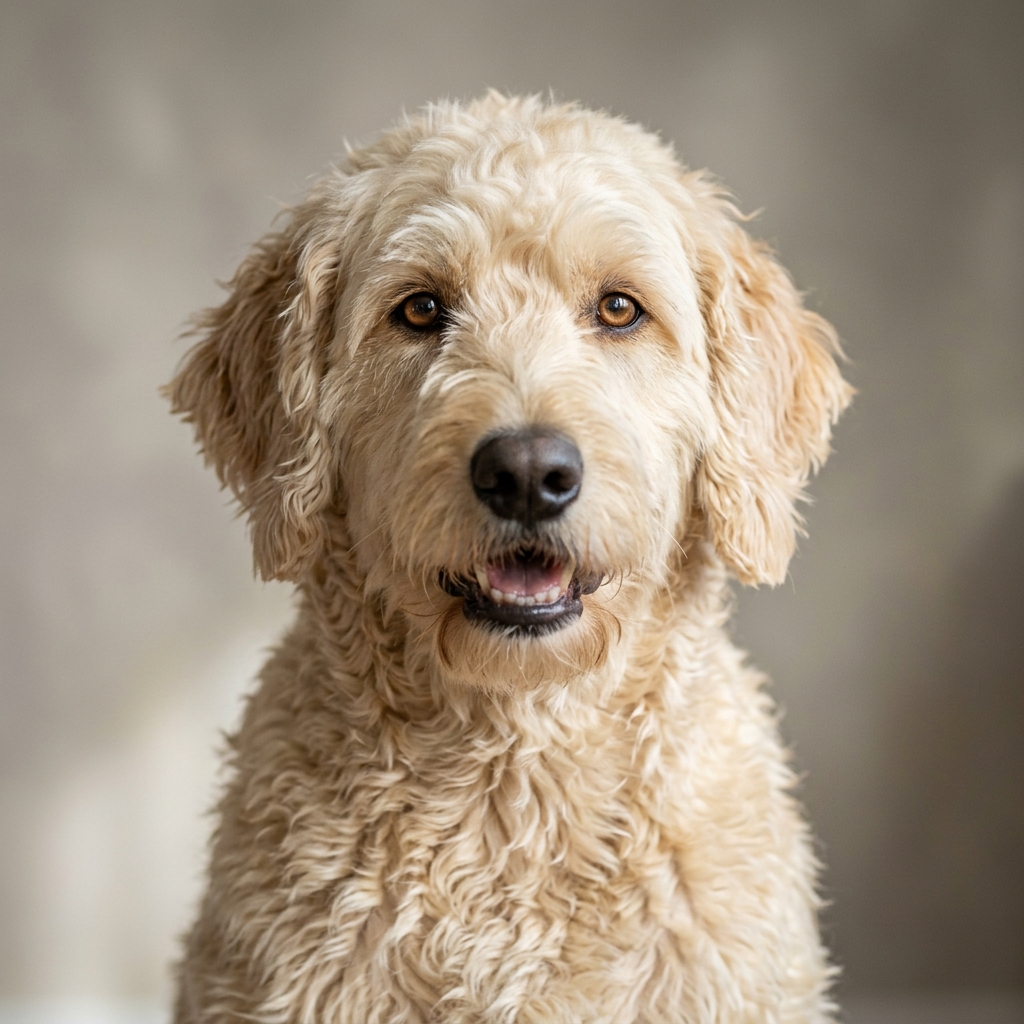
- Group
- Designer mix (Labrador Retriever × Poodle)
- Size
- Mini 15–30 lb · Medium 30–45 lb · Standard 50–65 lb
- Temperament
- Friendly, energetic, sociable, eager to please
- Life expectancy
- 12–15 years
- Coat
- Wool, fleece, or hair; shed level varies by generation
- Colors
- Cream, gold, apricot, red, chocolate, black, parti
- AKC recognized
- No — designer mix
- First bred
- 1989, Wally Conron, Royal Guide Dogs Australia
Is a Labradoodle right for you?
A wonderful high-energy family dog — provided you can match the energy and you do your homework on the breeder.
Energy. High. This is a Labrador crossed with a Poodle, two active breeds, and the result wants real daily exercise plus play. Most love water and swim well. A Labradoodle that does not get enough activity becomes an inventive problem-solver, and the inventions involve your belongings.
The coat lottery. First-generation Labradoodles (F1) vary — some shed, some do not, and you cannot fully predict which a given puppy will be. F1b crosses (bred back to a Poodle) shed less but cost more. If your allergy is serious, look hard at the more consistent Australian Labradoodle lines instead.
Adolescence. Expect the familiar doodle arc: delightful and biddable through about eight months, gleefully amnesiac through eighteen, and excellent again thereafter. Hold your nerve.
Trainability. Excellent — they descend, after all, from assistance-dog stock. Eager, smart, food-motivated.
Choosing a breeder. Given the breed's own cautionary history, this matters more than usual. Ask for the exact generation, the parents' health clearances (hips, elbows, eyes), and walk away from anyone treating the cross as a quick product rather than a considered pairing.
Famous Labradoodles
The most famous thing about the Labradoodle is its origin story and the regret attached to it. Wally Conron, the man who made the first one, became an unlikely public figure late in life by going on record that he wished he hadn't — not because the dogs were bad, but because he had inadvertently kicked off a designer-dog gold rush full of unscrupulous breeders. It is one of the rare breeds whose creator became its most prominent critic, and the story has been told and retold in the press for years.
Beyond that, Labradoodles have served widely as therapy and assistance dogs — the job they were invented for — and turned up in plenty of celebrity households along the way. But the Conron story is the one that sticks, and it carries a useful lesson baked right in: with this breed, the breeder is everything. Heed his warning and you get the friendly, capable dog he set out to make; ignore it and you get the cautionary tale he spent his retirement apologising for. The choice, as ever, is made long before the puppy comes home.
See Labradoodles on the live show
The Labradoodle brings the Labrador's bounce and the Poodle's flair to the stage, usually at the same time and usually at speed. Where the Australian Labradoodle has been bred toward calm consistency, the standard Labradoodle is a livelier, less predictable creature — and that unpredictability is half the entertainment. You never quite know which dog is going to walk out: the woolly one, the wavy one, the one built like a Lab in a curly wig.
What unites them is high spirits. A Labradoodle on stage is rarely still and never sullen. They bound, they grin, they fling themselves at the moment with the Labrador's bottomless enthusiasm, and viewers feed off the energy.
The bones come in fast on the good days. There is something infectious about a dog this pleased to exist, and the Labradoodle is, more often than not, the most pleased dog in the building.
See it live — free
The Dog Show runs around the clock: real dogs, a real stage, viewers cheering them on with bones. No signup needed to watch.
Watch the show free →Have a Labradoodle of your own? Put them on stage → · free to enter