Saint Berdoodle
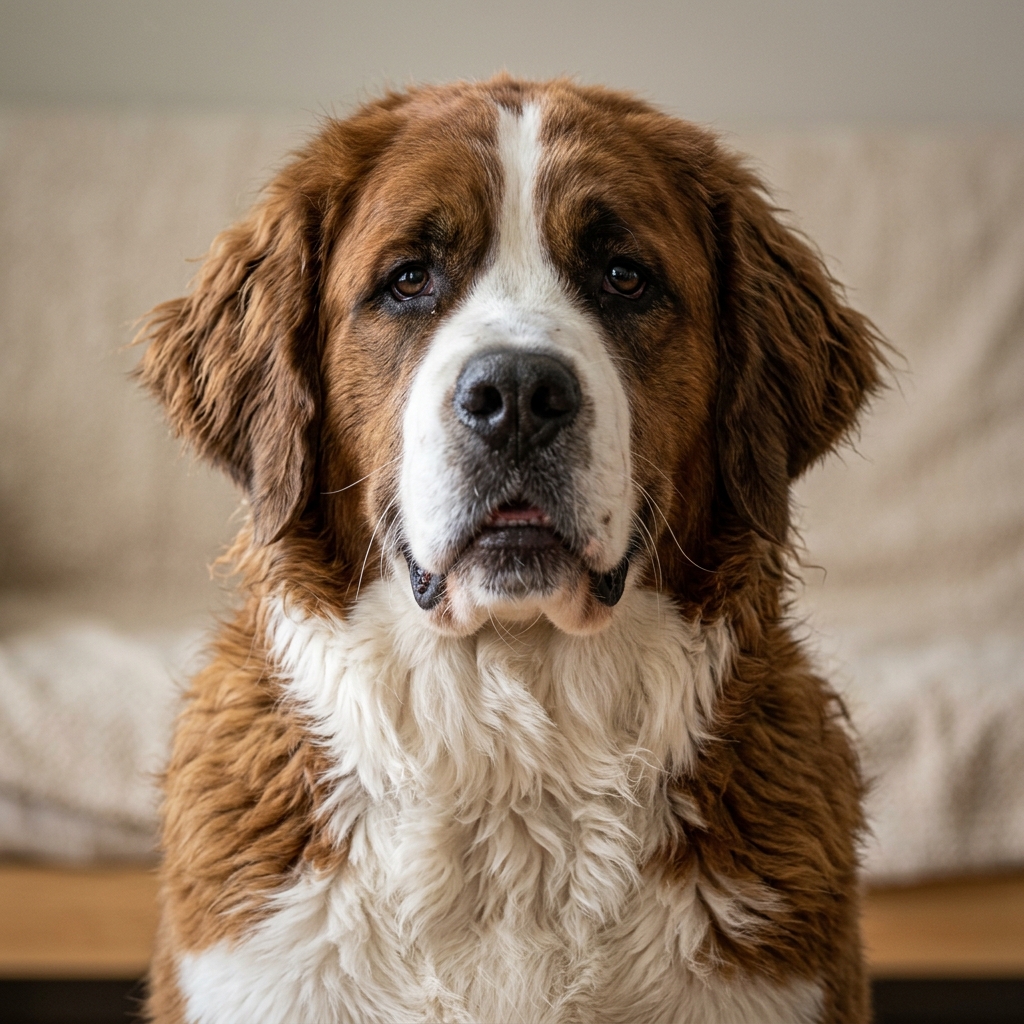
- Group
- Designer mix (Saint Bernard × Standard Poodle)
- Size
- Standard 110–180 lb · Mini 40–70 lb
- Temperament
- Gentle, patient, slow-moving, devoted
- Life expectancy
- 8–12 years
- Coat
- Wavy to curly; lower shedding than Saint Bernard, still drools
- Colors
- Brown/white, black/white, tri-color, sable
- AKC recognized
- No — designer mix
- Climate
- Cool to temperate; struggles in heat
Is a Saint Berdoodle right for you?
We need to talk about size.
A Standard Saint Berdoodle typically weighs 110 to 180 pounds. They eat accordingly. They take up the floor space of a small loveseat. When they shake water off, the water travels. If you are considering a Saint Berdoodle, the first question to answer honestly is: do I have the home, the floor surfaces, and the budget for a very large, slow-shedding dog?
Energy. Lower than the Poodle parent would suggest. Saint Berdoodles inherit the Saint Bernard's leisurely view of the day. A 30-minute walk and a bit of yard time is usually enough. They do not want to run. They want to be near you, often leaning on you.
Coat. Wavy to curly. Lower shedding than a Saint Bernard (which is high praise), but they drool. A Saint Berdoodle keeps a damp towel by the front door as a matter of cultural practice.
Trainability. Surprisingly good. The Poodle intelligence translates well, and the Saint Bernard's natural gentleness means you almost never need to be firm. Early socialisation is non-negotiable — a poorly socialised 150-pound dog is a household problem.
Health. Large-breed concerns dominate. Hip and elbow dysplasia, bloat, heart conditions. Their life expectancy is 8 to 12 years, which is the saddest sentence on this page. Choose a breeder who screens for heart and hip.
Climate. They cannot handle heat. A Saint Berdoodle in Phoenix in July is a welfare issue. They thrive in cool, temperate climates. If you live somewhere hot, please consider a different breed.
If you have the space, the time, and the budget — the Saint Berdoodle will be one of the most calming, generous, and quietly grand companions you ever meet.
Famous Saint Berdoodles
There is, as of this writing, no Saint Berdoodle in the cultural memory in the way Beethoven the Saint Bernard exists in it. The breed is too new, and arguably too rare — a Saint Berdoodle is significantly more expensive to produce than a regular Saint Bernard, and breeders are few. But the parent breed brings borrowed fame: every Saint Berdoodle is one cinematic step away from a chaotic family comedy, and the Poodle parent assures the cinematic Saint Berdoodle will be slightly smarter than the original Beethoven, which is a low bar.
Most actual Saint Berdoodles, in real life, are owned by families who wanted a Saint Bernard and were warned about the shedding. The dogs have no idea what they were almost instead. They are simply themselves: large, kind, and walking very slowly toward you to lean on your legs.
See Saint Berdoodles on the live show
The Saint Berdoodle is the closest we come to having an actual celebrity arrive at the studio. Viewer counts spike when one is announced. There is no other word — they are the broad-shouldered, slow-blinking presence at the back of every great Victorian portrait. They do not move quickly. They do not need to. The light comes to them.
What separates the Saint Berdoodle from its parent breeds, on screen, is the eyes. The Saint Bernard's eyes are kindly but hooded, weighed by the breed's quiet melancholy. The Poodle's eyes are bright and slightly mischievous. The Saint Berdoodle inherits a hybrid: kindly, and also up to something. Often you can see them thinking, and the thoughts are mostly about food and the well-being of the smallest person in the room, often at the same time.
Viewers respond by sending unusually large quantities of bones. Saint Berdoodles get the cathedral treatment. They accept it as their due.
See it live — free
The Dog Show runs around the clock: real dogs, a real stage, viewers cheering them on with bones. No signup needed to watch.
Watch the show free →Have a Saint Berdoodle of your own? Put them on stage → · free to enter