Mini Aussie
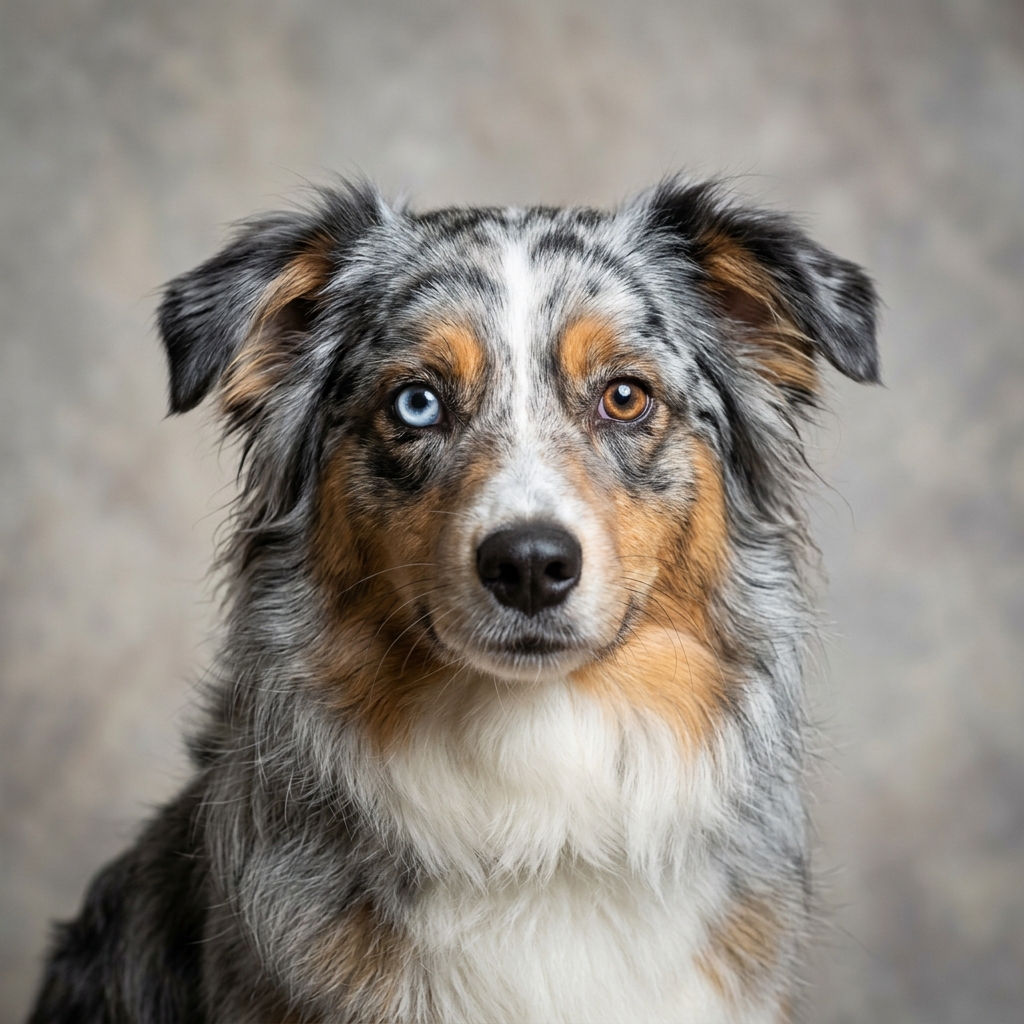
- Group
- Herding (size variant of Australian Shepherd)
- Size
- 15–35 lb · 13–18 inches at shoulder
- Temperament
- Intelligent, high-drive, wary of strangers, intensely bonded
- Life expectancy
- 13–15 years
- Coat
- Medium double coat; sheds heavily seasonally
- Colors
- Blue merle, red merle, black tri, red tri
- AKC recognized
- Yes, as "Miniature American Shepherd" (since 2015)
- Also called
- Miniature Australian Shepherd, Miniature American Shepherd
Is a Mini Aussie right for you?
The Mini Aussie is an active dog in a smaller body. Most of what is true about Australian Shepherds is true here.
Energy. High. Not "long walk a day" high — closer to "two hours of mixed activity, including some kind of mental work" high. A Mini Aussie left in an apartment with a chew toy will become a behavioural problem within a month. They need to do things.
Trainability. Off the chart. Mini Aussies are routinely among the top breeds in agility competitions for their size. They learn tricks faster than most owners can think of new ones. They also learn things you did not mean to teach them.
Coat. Medium-length double coat. Sheds. The undercoat blows out twice a year in dramatic fashion. Plan for weekly brushing and seasonal vacuuming.
Temperament. Wary of strangers, devoted to family. Mini Aussies tend to bond intensely with one or two people in the household. Early socialisation helps, but they are not Goldens — they are choosy.
Herding. This is the thing nobody tells first-time owners. A Mini Aussie with no work to do will herd. Children running in a back yard. Other dogs at the park. Bikes. Cats. The herding behaviour includes nipping at heels. It is not aggression, but it is not what most families have in mind when they bring home a small fluffy puppy.
Health. Hip dysplasia, eye conditions, and a particular sensitivity to certain veterinary drugs (MDR1 mutation) common in the breed. Reputable breeders test for MDR1.
The honest verdict: if you run, ride, hike, or compete in a dog sport, a Mini Aussie will be the most fun you have ever had with a dog. If your activity level is more domestic, please consider almost any breed on the doodle side of this list.
Famous Mini Aussies
Mini Aussies appear on the agility circuit far more than they appear in films. There is a small number of high-profile working Mini Aussies — the breed routinely dominates small-dog jumpers competitions out of all proportion to its actual population.
In film: nearly nothing. Mini Aussies are too recent and too uncooperative to make it into the major dog cinema. Australian Shepherds, the parent breed, have small roles in westerns. The Mini Aussie has aspirations.
Where Mini Aussies have arrived culturally is among a particular kind of outdoorsy young household: van life, climbing, backcountry skiing, the dog in the trailhead photograph. If you have seen a small fluffy merle dog in an Instagram tent recently, it was a Mini Aussie.
See Mini Aussies on the live show
Among our most photogenic guests, the Mini Aussie is also our most uncooperative. They are bred from working stock, and working dogs do not sit still on command from a glowing screen. What we get, on a typical Mini Aussie appearance, is roughly four seconds of perfect framed portrait — the merle coat, the asymmetric eyes, the alert ears, the absurdly photogenic face — and then a sudden pivot as the dog tries to herd something off-camera. It is invariably charming.
The merle colouring deserves a paragraph of its own. A blue merle Mini Aussie, lit correctly, is one of the most striking-looking dogs in the modern domestic repertoire. The base coat is silver-grey marbled with darker patches; the eyes are often two different colours, sometimes one eye split between two. Viewers send bones the first time they see a merle Mini Aussie, and again every time. It is a face that does not get familiar.
What they share with the standard Aussie: an intelligence that needs work, a drive that needs an outlet, and a willingness to attempt to herd cats, children, vacuums, and weather.
See it live — free
The Dog Show runs around the clock: real dogs, a real stage, viewers cheering them on with bones. No signup needed to watch.
Watch the show free →Have a Mini Aussie of your own? Put them on stage → · free to enter